Author: Bradden Hiking Stevens
Since childhood I have had a great fascination with the insect world, studying nature conservation and working in some wild places has only furthered this fascination.
I feel insects in general, are all too often only seen as pesky harmful pests. Yes, many do impact our lives negatively, but life as we know it would not be possible without them.
The female Anopheles species mosquitoes have been given the title of the biggest killer in the animal kingdom as they can transmit Malaria, a disease which is said to infect some 200 million people per year, +-1 million of which will die.
Some insects, such as fruit flies damage agricultural crops, resulting in large economic losses. Other flies, such as the Tsetse Fly, Black Fly, Flesh Fly and Blow Fly are also capable of spreading a variety of deadly diseases.
Termites and borers can do substantial damage to wooden structures, while the stings and bites of some are medically significant.
The above being said, most insects are harmless to man; many are beneficial and essential to life on earth.
World renowned Biologist E.O. Wilson once wrote, “So important are insects and other land dwelling arthropods, that if all were to disappear, humanity probably could not last for more than a few months”. This is a bold statement, but one I feel is justifiable.
Bees (there are more than 20 000 species identified worldwide) are known to be excellent pollinators of crops and indigenous plants. Lambert Smith wrote in his book ‘Remarkable insects ‘(2008) “In South Africa the value added to crop production by the commercial pollination of Honey Bees has been estimated to be in the order of R3.2 billion per annum.”
Many other insects, such as beetles, butterflies, moths, wasps, flies and ants also play a vital role in the pollination of flowering plants, on which we all depend. Certain plants, such as fig trees are only pollinated by insects, in this case one of Fig wasps (Family Torymidae).
Many insects play a crucial role in the decomposition of plant and animal wastes, as well as nutrient cycling. Without them we would be buried in our own waste. Moth Flies (Family Psychodidae) larvae (the adults are short lived and do not eat) feed exclusively on fungus and play an important role in the breakdown of fungi and bacteria at sewage plants (and you thought you had a sh#t job).
Ants, termites and others aerate the soil and bring mineral nutrients from lower levels in the soil profile to the surface. Palatable grasses and evergreen trees often colonize the nutrient rich topsoil found surrounding termite mounds, to the benefit of grazing and browsing mammals.
These are just some of the numerous benefits we get from insects, others include; being used as biological control agents (a very promising field used to control other `pest insect species’ and alien invasive plants); a source of food for a variety of animals and humans, as well as various uses of insect and/or insect products in the medical field.
Approximately 1 million species of insects have been documented to date and scientists estimate that there are at least another million to be discovered! Sadly many of these will be extinct before even being documented. Globally, Scientists and laymen alike are reporting a substantial decrease in insect numbers and diversity. A Recent Study published in the Journal ‘Biological Conservation’ suggests that 40% of all insect species are in decline. Habitat destruction, climate change, pollution and the indiscriminate use of pesticides remain major contributing factors to this decline.
A largely hidden world exists beneath our feet! Scenes of peaceful grazers being hunted by veracious predators unfold in our homes/gardens on a daily basis. Social insects work in perfect unison, some even farm, as seen with ants farming aphids and scale insects, for the honey dew they produce. Butterflies, moths, beetles and many others continue to amaze and inspire civilizations!
All one needs do, to access this magical world, is to look a little closer.
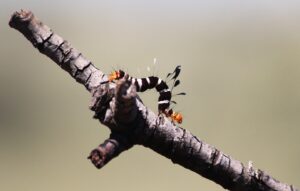
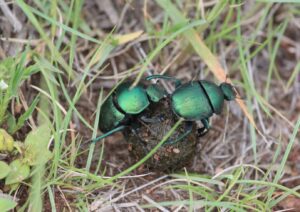
Pictures below: Left - Dice moth caterpillar, Right - Emerald dung beetles on the job