
Birdlife You'll See Hiking With Go Hiking SA
Hiking and birdwatching go together more naturally than most people expect. A slower pace, a quiet group, and a guide who knows where to look turns an ordinary trail into a genuine birding outing — and across the reserves, farms, and conservation projects Go Hiking SA visits in Gauteng, North West, and Mpumalanga, there's a lot to see. From the endangered Cape Vultures we work with at Vulpro, to the carmine bee-eaters and rollers along the Olifants River at Bezhoek, to the grassland species out in the Magaliesberg, our hikes regularly put us within camera range of birds most people only see in a field guide. This page rounds up what we've actually photographed on our own hikes, organised by the area you'll find them, plus a few tips for getting the most out of birdwatching while you hike with us.
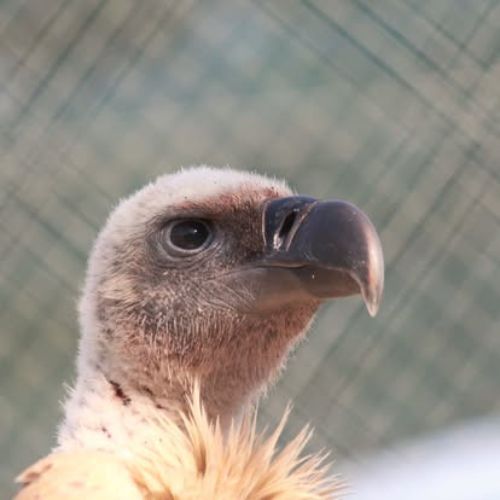
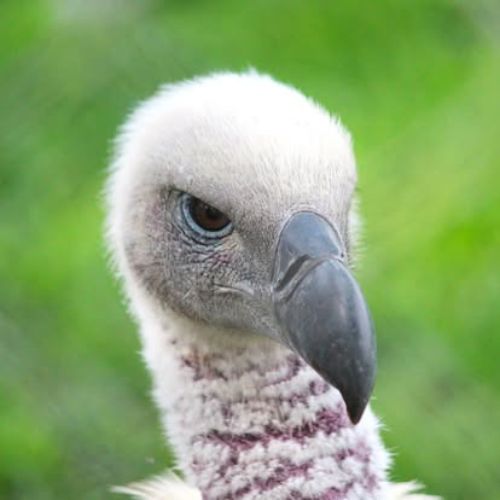
Cape Vultures at Vulpro (North West)
Vulpro, near Hartbeespoort in North West, is Africa’s only dedicated vulture conservation and rehabilitation programme, and it’s the centrepiece of our Soaring with Vultures experience — a 10km hike at Vergenoeg on the edge of the Magaliesberg, followed by a visit to the facility itself.
The species you’ll see up close at Vulpro is the Cape Vulture (Gyps coprotheres), one of southern Africa’s most threatened birds of prey, classified as Vulnerable with a population confined almost entirely to South Africa, Lesotho, Botswana, and Namibia. Adults have a pale cream-buff body with a bare, pinkish-grey neck and head — the bare skin helps keep them clean while feeding, and the loose folds and colour shift with age and mood. Chicks, like the fluffy cream-down bird you’ll sometimes see in Vulpro’s breeding and rehabilitation enclosures, look almost nothing like the adults until their flight feathers come in.
On the hike out at Vergenoeg itself, wild Cape Vultures can be seen riding the thermals off the Magaliesberg cliffs — around 350 breeding pairs use the cliffs there, and watching them launch and circle at close range is one of the more memorable moments on any of our hikes. Vulpro’s work rehabilitating injured birds, many of which come in after power-line collisions or poisoning, is a big part of why we built this hike around a donation to their wishlist rather than just an entry ticket. Book the Vergenoeg/Vulpro Experience to see them for yourself.
[Photo: Cape Vulture chick, downy cream plumage, Vulpro enclosure]
Birdlife at Bezhoek Private Nature Reserve (Mpumalanga)
Most of our best bird photographs come from Bezhoek Private Nature Reserve in the Olifants River Valley, Mpumalanga — home to both our Seeking Sunsets & Chasing Waterfalls overnight hike and the shorter Bezhoek Day Hike. The reserve’s river frontage, cliffs, and grassland make it one of the richest birding spots we visit.
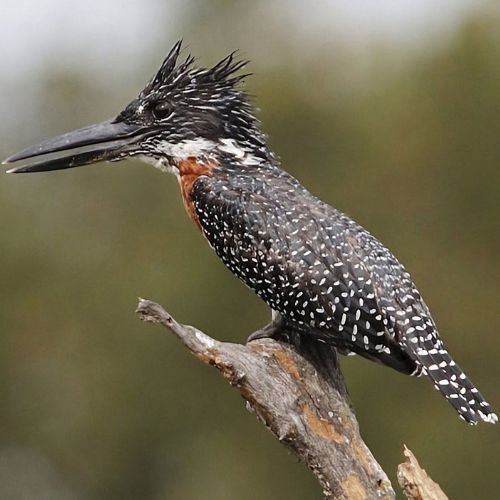
Giant Kingfisher
The largest kingfisher in Africa, the Giant Kingfisher (Megaceryle maxima) is unmistakable — a shaggy black-and-white speckled crest, a heavy dagger of a bill, and a chestnut breast band on the male. They hunt from perches over water, diving for fish, frogs, and crabs, and their harsh, rattling call often gives them away before you spot them.
[Photo: Giant Kingfisher perched on a branch, crest raised, bill open]
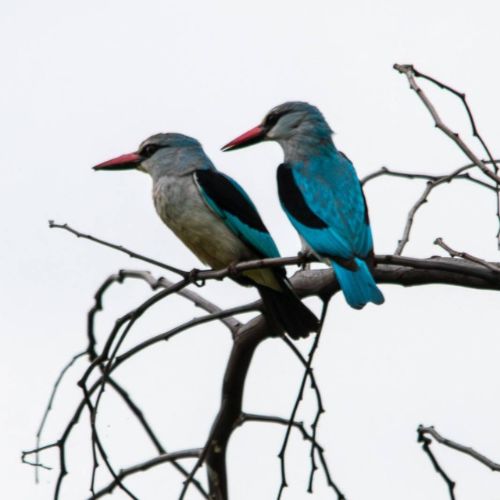
Woodland Kingfisher
Despite the name, the Woodland Kingfisher (Halcyon senegalensis) rarely eats fish — it’s more often found away from water, hunting insects and small reptiles from a perch. Pairs, like the two photographed together at Bezhoek, are easy to identify by the pale grey head, turquoise back and wings, black shoulder patch, and bright red-orange bill. They’re intra-African migrants, arriving in South Africa with the summer rains and heading north again by autumn.
[Photo: Pair of Woodland Kingfishers perched together on bare branches]
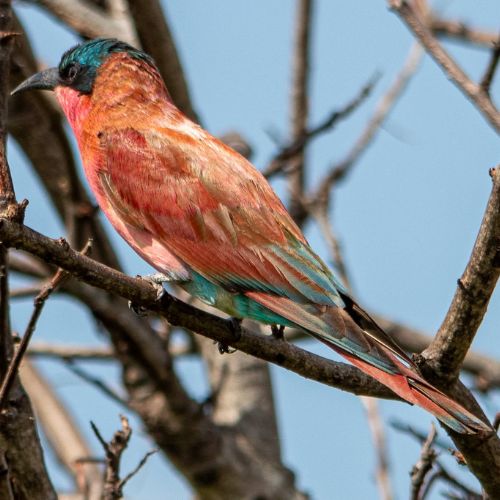
Southern Carmine Bee-eater
Arguably the most striking bird on this page, the Southern Carmine Bee-eater(Merops nubicoides) is vivid pink from throat to tail, with a turquoise-green head and a black eye mask. They breed colonially, digging nest tunnels into riverbanks — the Olifants River Valley’s exposed sandy banks make Bezhoek good habitat for exactly that. Like the Woodland Kingfisher, they’re summer migrants, so your best chance of seeing them is a hike between roughly October and April.
[Photo: Southern Carmine Bee-eater perched on a thorny branch, full body profile]

European Roller
A more understated cousin of the Lilac-breasted Roller, the European Roller (Coracias garrulus) has pale blue-turquoise underparts and head with a chestnut-brown back. It’s a long-distance migrant, breeding in Europe and wintering in southern Africa, which makes a sighting at Bezhoek a genuine summer highlight rather than a year-round guarantee.
[Photo: European Roller perched, calling with beak open]
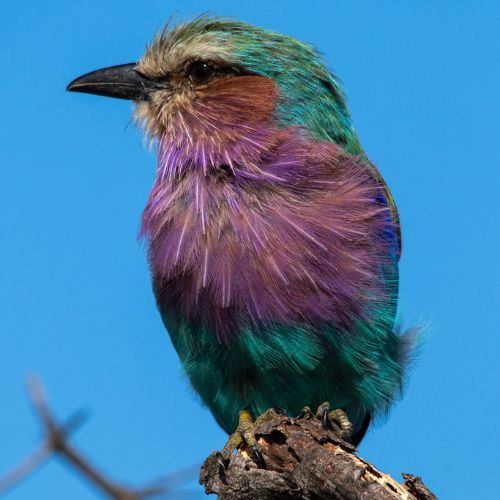
Lilac-breasted Roller
If there’s one bird people hope to photograph on a bushveld hike, it’s this one. The Lilac-breasted Roller (Coracias caudatus) combines a green crown, lilac throat and breast, and turquoise belly and wings into what’s often called one of Africa’s most beautiful birds. They perch prominently on exposed branches, which — combined with the colouring — makes them one of the easier bushveld birds to actually get a good photo of.
[Photo: Lilac-breasted Roller perched against a clear blue sky]
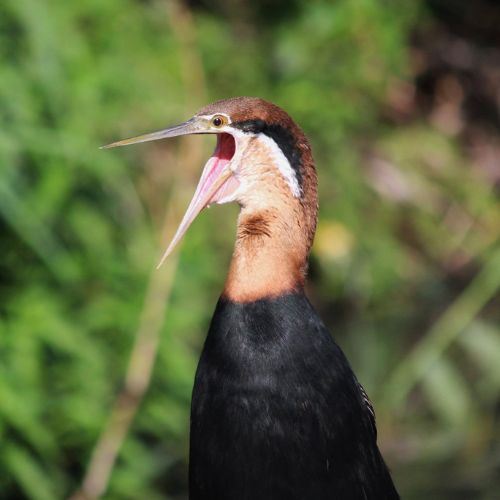
African Darter
Often seen perched with its bill open and head thrown back mid-call, the African Darter (Anhinga rufa) is built for hunting underwater — a long, snake-like neck and a spear-like bill it uses to skewer fish before surfacing to swallow them whole. The chestnut neck with a white stripe running down the side is the easiest way to tell it apart from cormorants, which share similar riverside habitat at Bezhoek.
[Photo: African Darter with beak open, chestnut neck and white throat stripe visible]
Grassland Birds in the Magaliesberg & North West
Our hikes out at Olive Tree Farm, in the Magaliesberg/Hekpoort area, cover more open grassland and conservancy terrain than Bezhoek’s riverine habitat, and the birdlife reflects that.
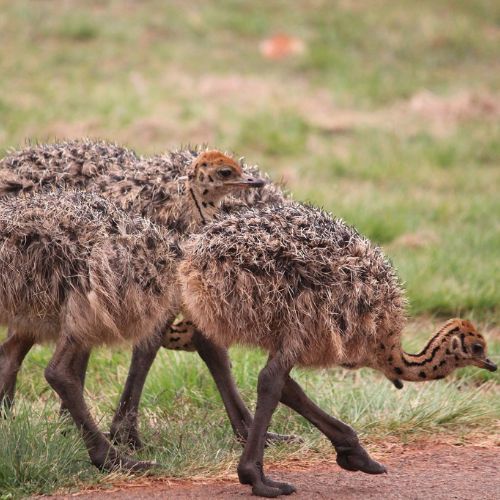
Ostrich (Struthio camelus) share the conservancy at Olive Tree Farm with giraffe, zebra, wildebeest, kudu, eland, and more — the world’s largest bird, and genuinely part of the walking safari experience there rather than an occasional sighting. Chicks, like the pair pictured here, stay close to an adult and are surprisingly fast on their feet within days of hatching.
[Photo: Two ostrich chicks walking together across grassland]

The African Wattled Lapwing (Vanellus senegallus) is a more subtle sighting — a grey-brown, streaked ground bird with a white crown stripe, small red facial wattles, and a yellow bill tipped in black. They favour grassland and the margins of wetlands and farm dams, which makes the open country around B'Sorah and Olive Tree Farm good habitat. Like most lapwings, they're vocal and protective around nesting season, often the first sign you'll get that one is nearby.
Birdwatching Closer to Home: Gauteng’s Reserves
You don’t need to leave Gauteng for decent birding, either. Rietfontein Nature Reserve in Paulshof — a short, free trail we’ve written up in detail — is home to little swifts, Cape glossy starlings, sacred ibis, southern masked weavers, black-collared barbets, Cape robin-chats, and grey loeries, among others. Rietvlei Nature Reserve near Pretoria adds waterbirds and raptors to the mix alongside its rhino and buffalo. And if you want dedicated birding reserves rather than general hiking spots, Delta Park’s Florence Bloom Bird Sanctuary and the Melrose Bird Sanctuary in Johannesburg are both purpose-built hides with over 100 recorded species each — covered in full on our Johannesburg Nature Reserves page.
Best Time of Year for Birding on Our Hikes
Timing matters more for some of these species than others. Cape Vultures are visible at Vulpro and on the Vergenoeg cliffs year-round, though breeding season (roughly April to November) is when you’re most likely to see adults tending nests. The Woodland Kingfisher, Southern Carmine Bee-eater, and European Roller are all intra-African or long-distance migrants that spend our summer (October to April) in South Africa and head north for the rest of the year — book a Bezhoek hike in summer if any of these three are on your list. Grassland species like the African Wattled Lapwing and the general birdlife around Rietfontein and Rietvlei are more consistent year-round, though early morning is always the better time to go, regardless of season.
Tips for Birdwatching While You Hike
- Bring binoculars if you have them — even entry-level ones make a real difference at a distance.
- Keep the group pace slow near water — kingfishers, darters, and herons tend to flush if you approach too fast.
- A zoom lens (or phone with good digital zoom) beats trying to get close for a photo — most birds on this page won’t let you.
- Go early. The two to three hours after sunrise are consistently the most active for bird behaviour and sightings.
- Ask your guide. Both Carol and Bradden regularly point out species most hikers would walk straight past.
Why Bird With a Guide
Bradden Stevens’ background is in nature conservation and field guiding, with a national diploma from Tshwane University of Technology and time spent guiding within the Thornybush Game Reserve before he settled into guiding at Rietvlei and, later, with Go Hiking SA. That kind of background is the difference between walking past a Giant Kingfisher’s perch and actually knowing to slow down and look. Read more about Bradden and Carol on our team page. If birdlife is a priority for you rather than a bonus, mention it when you book — we can point you toward the hikes and times of year best suited to it.
Frequently Asked Questions
What birds can I see at Vulpro?
Vulpro’s focus is the Cape Vulture, an endangered species you’ll see at every stage from downy chicks to adults, both in their breeding and rehabilitation enclosures and wild on the cliffs at nearby Vergenoeg.
What’s the best Go Hiking SA hike for birdwatching?
For variety, Bezhoek — either the day hike or the overnight Seeking Sunsets & Chasing Waterfalls experience — covers the widest range of species thanks to its river frontage. For a single standout species, the Soaring with Vultures hike at Vergenoeg and Vulpro is hard to beat.
Do I need my own binoculars?
They’re not required, but they help. If you don’t have a pair, you can still expect to get closer to birdlife than you would on a self-guided walk, since our guides know where and when to slow down.
Is birdwatching possible year-round on your hikes?
Yes, though some species are seasonal. Migrants like the Southern Carmine Bee-eater, Woodland Kingfisher, and European Roller are only present in South Africa’s summer months (roughly October to April); resident species like the Cape Vulture and African Wattled Lapwing can be seen year-round.
| Want to see any of these for yourself? Check our upcoming hikes and events or book the Vergenoeg/Vulpro Experience directly. |